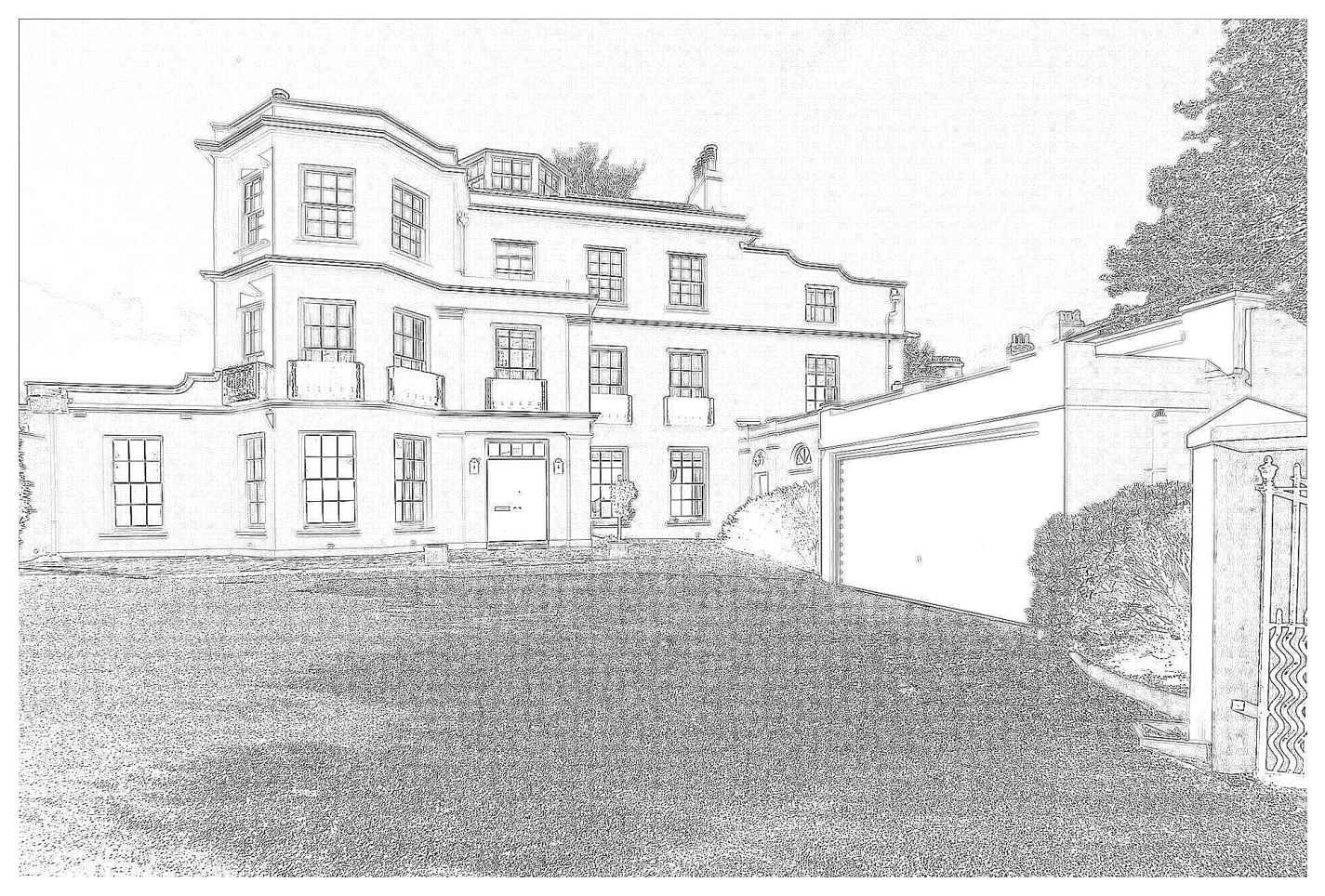
Brockhurst: Historic Georgian House in Guernsey (c.1740)
An imposing Georgian townhouse located on The Grange in St Peter Port, Guernsey
Brockhurst Guernsey: Historic Overview
Few private homes in the British Isles can claim connections to a Lord Chancellor, a national hero on two continents, a Bailiff who shaped a nation's laws — and a Victorian army officer whose story ended in murder and mystery on the plains of East Africa. Brockhurst, built around 1740 on The Grange in St Peter Port, is one of those homes.
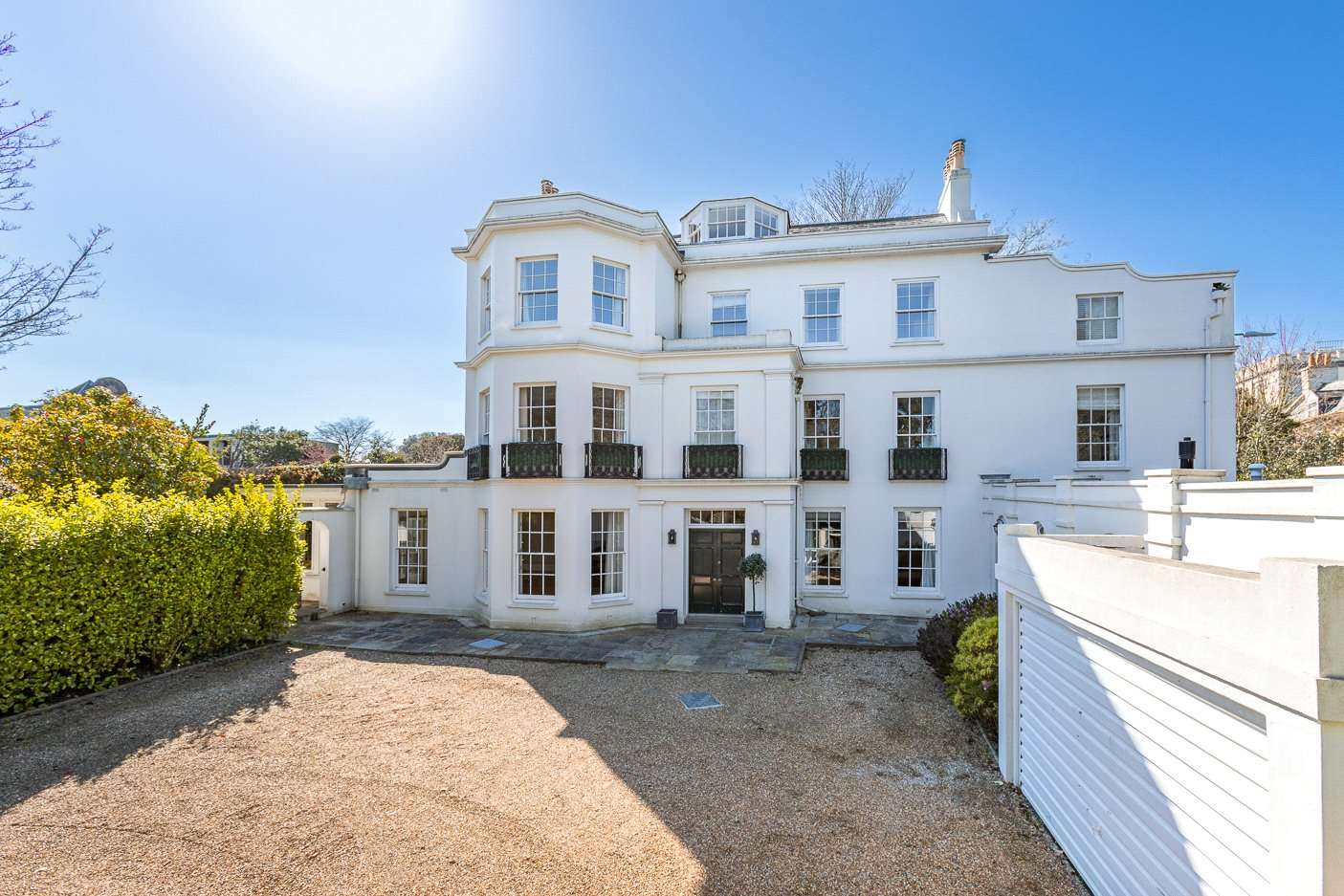
Nestled on The Grange in St. Peter Port, Guernsey, Brockhurst is one of Guernsey's most historic homes. This imposing Georgian townhouse - built around 1740 by William Brock as his summer residence - stands as a testament to the island's 18th-century prosperity and architectural grandeur. With its symmetrical classical facade, elegant sash windows, and sturdy granite walls, Brockhurst exemplifies the refined Georgian style. Overlooking town and sea, the house originally enjoyed panoramic eastward views, a feature much admired when it was first built. Even today, from the top 2 floors the sea, the island of Sark, Jethou, Herm and Brecqhou are still visible.
Over the centuries, Brockhurst's gracious halls have witnessed history in the making. The estate was the long-time home of the Brock family, an English-origin family established in Guernsey since the 1500s. Under their roof lived statesmen, military heroes, and community leaders whose stories intertwine with that of Guernsey itself. From hosting gatherings of Guernsey's elite in the 18th and 19th centuries to being requisitioned during WWII, Brockhurst's walls carry the echoes of pivotal moments in island history.
Brockhurst Architecture: Georgian Design in Guernsey
Georgian Architecture in Guernsey
Brockhurst exemplifies the refined Georgian architectural style with its symmetrical classical facade, elegant sash windows, and sturdy granite walls. The house features the characteristic proportions and classical detailing that define 18th-century British architecture, making it one of Guernsey's finest examples of Georgian design.
Originally designed to take advantage of its elevated position in St Peter Port, Brockhurst enjoyed panoramic eastward views over the town and sea, much admired when the house was first built and remains one of its most distinctive characteristics among Guernsey's historic properties. Today only two of the original homes face East along the Grange, whilst others face the road.
“The best part in the vicinity of the town… a great thoroughfare, not only to the country but to the various family mansions about the neighbourhood.”
Brockhurst Guernsey: Notable Residents
The Brock Family of Guernsey
William Brock (1702 - 1776) built Brockhurst as his summer residence in Guernsey. He married Mary Henry (1706–1742) and had six children; his son John Brock (1729–1777) would become the father of both Daniel de Lisle Brock and Isaac Brock — the two most celebrated members of the family. William's holdings in St Peter Port extended well beyond Brockhurst: he also owned Granite House at the top of High Street and held half of the de Beauvoir Estate, reflecting the family's pre-eminent position in Guernsey society. His son William Brock Jr. (1725 - 1768) resided here with his wife Judith de Beauvoir, connecting the family to Guernsey's de Beauvoir lineage. Under their ownership, Brockhurst became a social hub for the upper echelons of Guernsey society. The Brock line in Guernsey lasted until 1919, when Henry Walter Brock — the last of the family born on the island — died, bringing to a close nearly four centuries of Brock history in Guernsey.
Daniel de Lisle Brock: Guernsey's Famous Bailiff
Nephew of William Jr., Daniel de Lisle Brock (1762 - 1842) served as Bailiff of Guernsey (chief magistrate) from 1821 to 1842. Daniel grew up in the Brockhurst household and later presided over the island during a transformative era. On four separate occasions he was dispatched to London to defend Guernsey's trade privileges and legal autonomy before Parliament — succeeding each time. Under his leadership, Guernsey introduced its own state-backed currency, built new roads, and oversaw the construction of a new Elizabeth College building in 1826 — effectively reviving an institution originally founded by royal charter from Elizabeth I in 1563. He was accorded a public funeral upon his death in 1842. His portrait adorns the 1991 £1 banknote and a bronze bust graces the High Street in St. Peter Port, Guernsey.
Major-General Sir Isaac Brock: Guernsey's Canadian Hero
Though not an owner of Brockhurst, Isaac was Daniel's younger brother and spent his youth among the Brock family properties in Guernsey. Sir Isaac would become a legendary figure abroad, known as the “Hero of Upper Canada” for his defence of Canada during the War of 1812. In one of history's great feats of military bluff, he forged an alliance with the Shawnee leader Tecumseh — who on meeting him reportedly declared “This is a man!” — and together they forced an American force that outnumbered them to surrender Fort Detroit without a single British life lost. He later fell at the Battle of Queenston Heights on 13 October 1812. His knighthood was posthumous — he died before he could be told of the honour. His childhood home on High Street, St Peter Port — distinct from Brockhurst, which was the family's summer residence — still stands today, now occupied by Boots the Chemist and marked with a memorial plaque.
Victorian Era at Brockhurst Guernsey
Hon. Emily Evelyn Brougham (1839 - 1919) and her husband Captain Francis S. Dugmore (1839 - 1898) brought an extraordinary aristocratic chapter to Brockhurst. Emily was the daughter of the 2nd Baron Brougham & Vaux and great-niece of Henry Brougham, Lord High Chancellor of Great Britain — the statesman who steered through the Reform Act 1832 and Slavery Abolition Act 1833, helped found the University of London, and gave his name to the Brougham carriage. By 1891, following the breakdown of her marriage, Emily was living at Brockhurst on private means with her two youngest sons, and remained in Guernsey until her death in 1919. Her husband Francis had a more turbulent fate: after a distinguished military career in Canada and service in the 64th Regiment of Foot, he joined the ill-fated Freelanders' expedition to East Africa in 1894 — a utopian socialist colony scheme near Mount Kenya that proved a complete failure. His mental state deteriorating on the East African plains, he shot a colleague dead during a dispute in 1898, then took his own life while awaiting trial in Mombasa. The colonial press reported his death as apoplexy; the full story was only recovered by historians more than a century later. Read the full story.
20th Century Stewards of Brockhurst Guernsey
The McCave family purchased Brockhurst in the 1920s, running a successful seed and fertilizer business that contributed to Guernsey's agricultural heritage. During WWII, the house was requisitioned for military administrative use, but the McCaves stayed on site and their agricultural expertise helped islanders cultivate vital crops during the occupation. Later, Dennis Curry (1912–2001) — chairman of the Currys retail chain from 1967 to 1984, and a Cambridge-educated geologist, visiting professor at University College London, and Fellow of the Geological Society who donated 90,000 fossil specimens to the Natural History Museum — purchased Brockhurst in 1974/75. A man his peers described as “a remarkable polymath,” he modernized aspects of the property while preserving its historic character.
Brockhurst Guernsey: Restoration & Preservation
National Trust of Guernsey Era
In an extraordinary act of generosity, Florian Carr bequeathed Brockhurst to the National Trust of Guernsey in 2000 for the token price of one golden guinea. This marked the beginning of a new chapter focused on preservation and public interest in Guernsey's heritage.
The National Trust of Guernsey undertook an extensive restoration of Brockhurst in the 2010s. Nearly 14 years of planning and fundraising culminated in a major works project beginning in July 2014. Led by Cresswell Cuttle & Dyke (CCD) Chartered Architects and built by local firm CA Duquemin, the restoration was one of the most ambitious in NTG's history. The scope ran from rewiring and replumbing to painstaking repairs of the historic timber roof, leadwork, flagstones, and ironmongery — elements CCD noted were “unique because of their superior quality and quantity” compared to other historic properties. Most remarkably, workers discovered hidden 18th-century panelling and a concealed doorway behind later additions, prompting a layout revision that revealed the original dining room entrance — Brockhurst literally disclosing its own secrets. A flat-roofed Georgian-style orangery replaced a later conservatory, restoring a more historically consistent appearance.
The Brockhurst Restoration Project
Every effort was made to return Brockhurst to its 18th-century splendor - from repairing the roof and structure to meticulously restoring interior details like moldings, panelled walls, and even installing historically-inspired lighting and fireplaces. The result, unveiled in October 2015, was Brockhurst reborn: a shining example of heritage conservation in Guernsey.
The house was opened for public tours during "Open Days" in late 2015, giving locals a rare glimpse inside this once-private gem in Guernsey. Many were awed by the four-story Georgian staircase, the gracious reception rooms, and the seamless blend of modern comforts with historical authenticity. The approach reveals a stately façade, masterfully designed to impress at every glance.
Brockhurst Guernsey: Legacy & Future
Current Status of Brockhurst Guernsey
In March 2024, the National Trust passed the torch to new private owners - Brockhurst was sold on the open market. The sale proceeds were earmarked for other crucial heritage projects in Guernsey (such as a new state-of-the-art storage facility for museum artefacts), meaning Brockhurst's legacy is indirectly supporting wider preservation efforts in the island.
Today, Brockhurst remains a private family home in Guernsey, but its current owners are deeply committed to honouring and enhancing its distinguished heritage. Their dedication has been matched by significant ongoing investment in both the property and its extensive gardens and grounds. The restoration has been painstaking and comprehensive: from the careful renovation of the original windows, exquisite redecoration, and complete upgrades to the electrics and heating systems, through to the meticulous renewal of the roof. The owners have also spared no expense in reinstating the formal grandeur of the estate, including the restoration of the swimming pool to its former glory. As a result, Brockhurst stands in magnificent condition—"one of the finest period homes of St Peter Port, with style, character and charm,". This unwavering commitment has elevated Brockhurst to a rarefied status among Guernsey's great homes, blending historical elegance with luxurious modern living.
Brockhurst's Enduring Heritage in Guernsey
The elegant Georgian interiors and the peaceful walled garden continue to be cherished and well-kept. While not generally open to the public, Brockhurst occasionally features in heritage open days or publications, allowing its story to be shared with visitors to Guernsey. Each generation, from the Brocks to the present, has been a steward of this remarkable property. Brockhurst thus lives on not only as an architectural landmark but as a symbol of Guernsey's enduring commitment to its heritage - a legacy preserved for future generations.
Explore Brockhurst
Discover the detailed chronological history of Brockhurst and all its notable residents from 1740 to the present day.